RFDA Essential
Material testing equipment at room temperature
Introduction to the RFDA Essential as material testing equipment
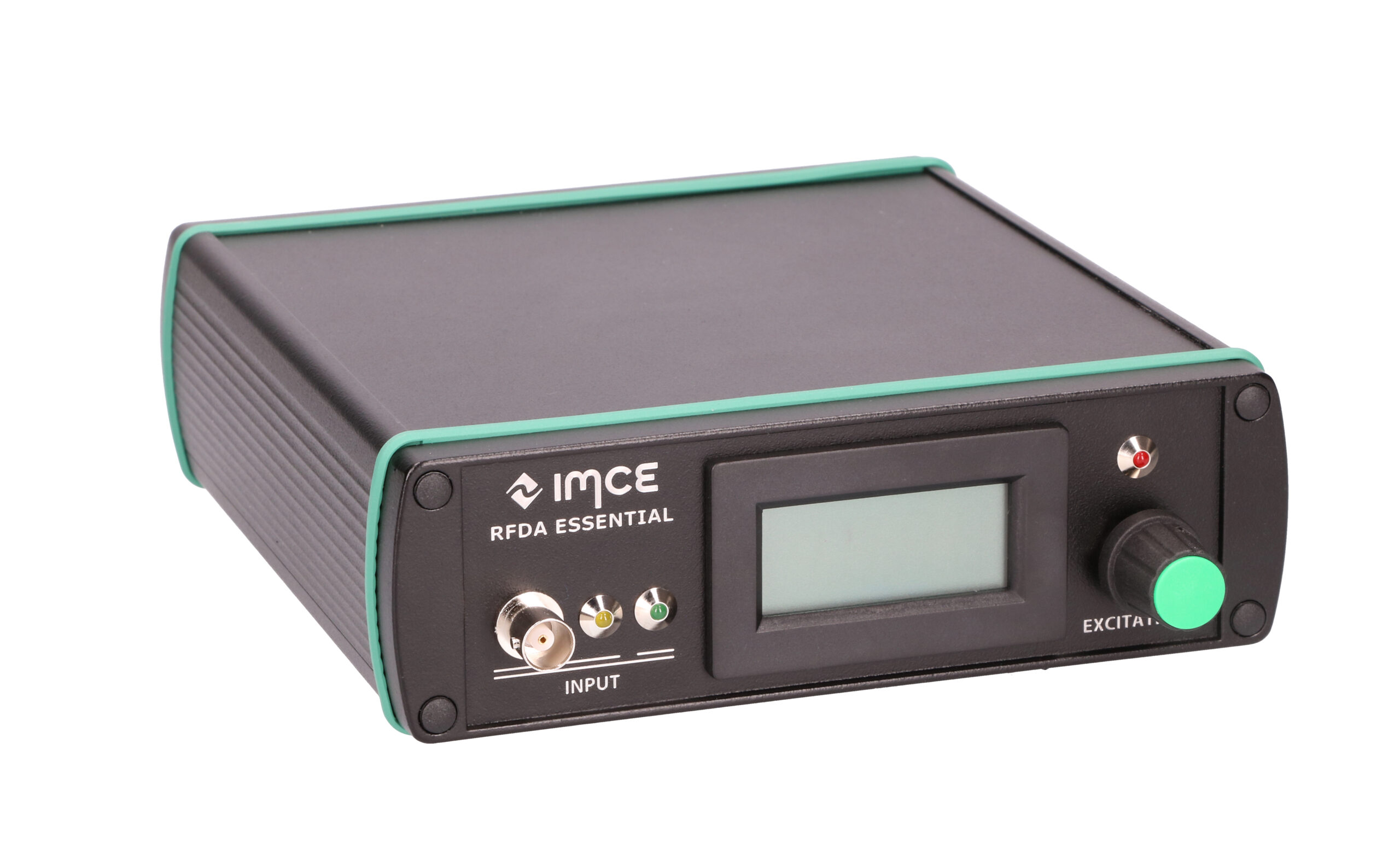
Maximize your materials testing and -characterization capabilities with the RFDA Essential. The RFDA Essential offers you the benefits of the non-destructive Impulse Excitation Technique (IET) in a mid-range instrument. Applications range from research to materials analysis, product inspection and many more.
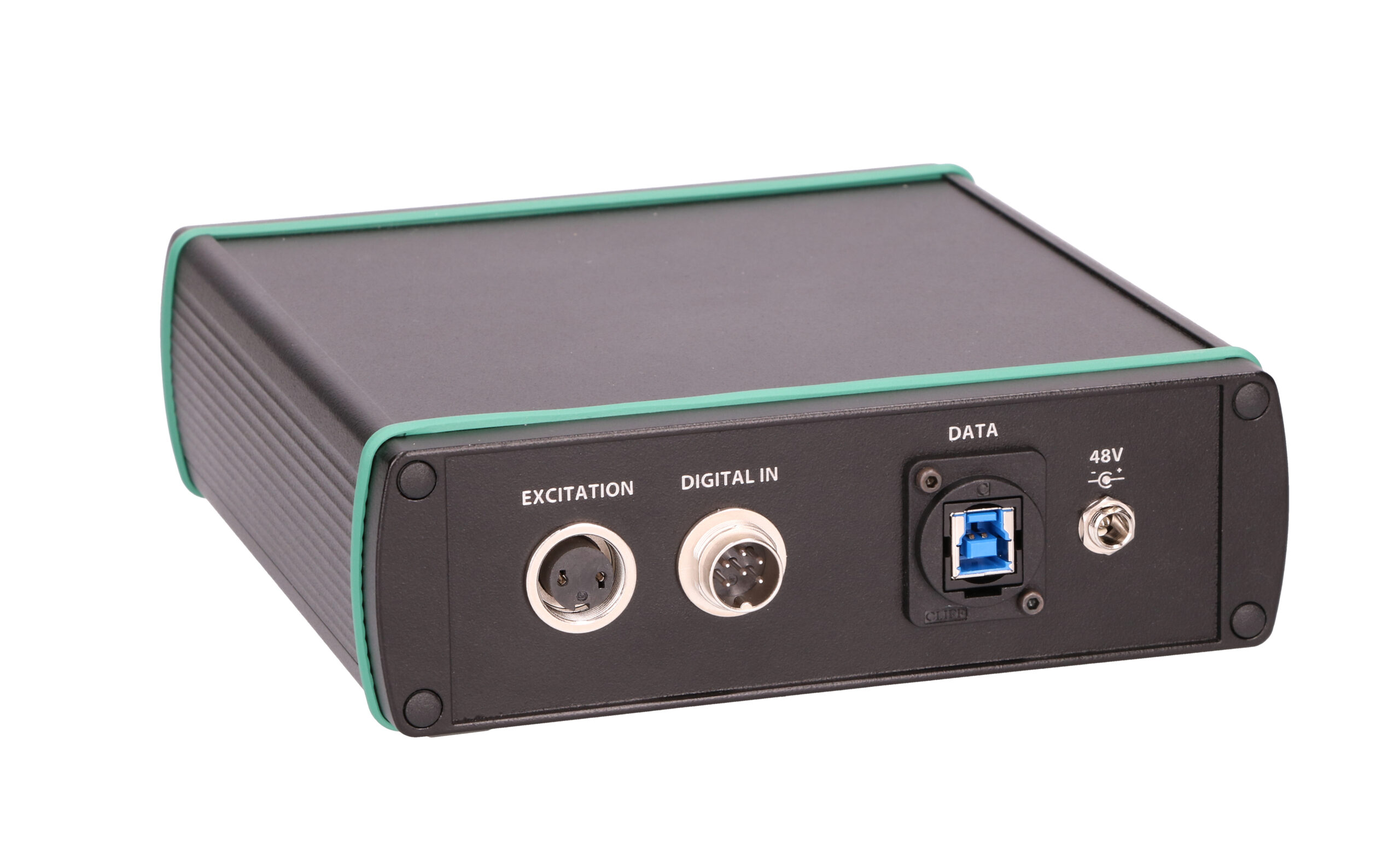
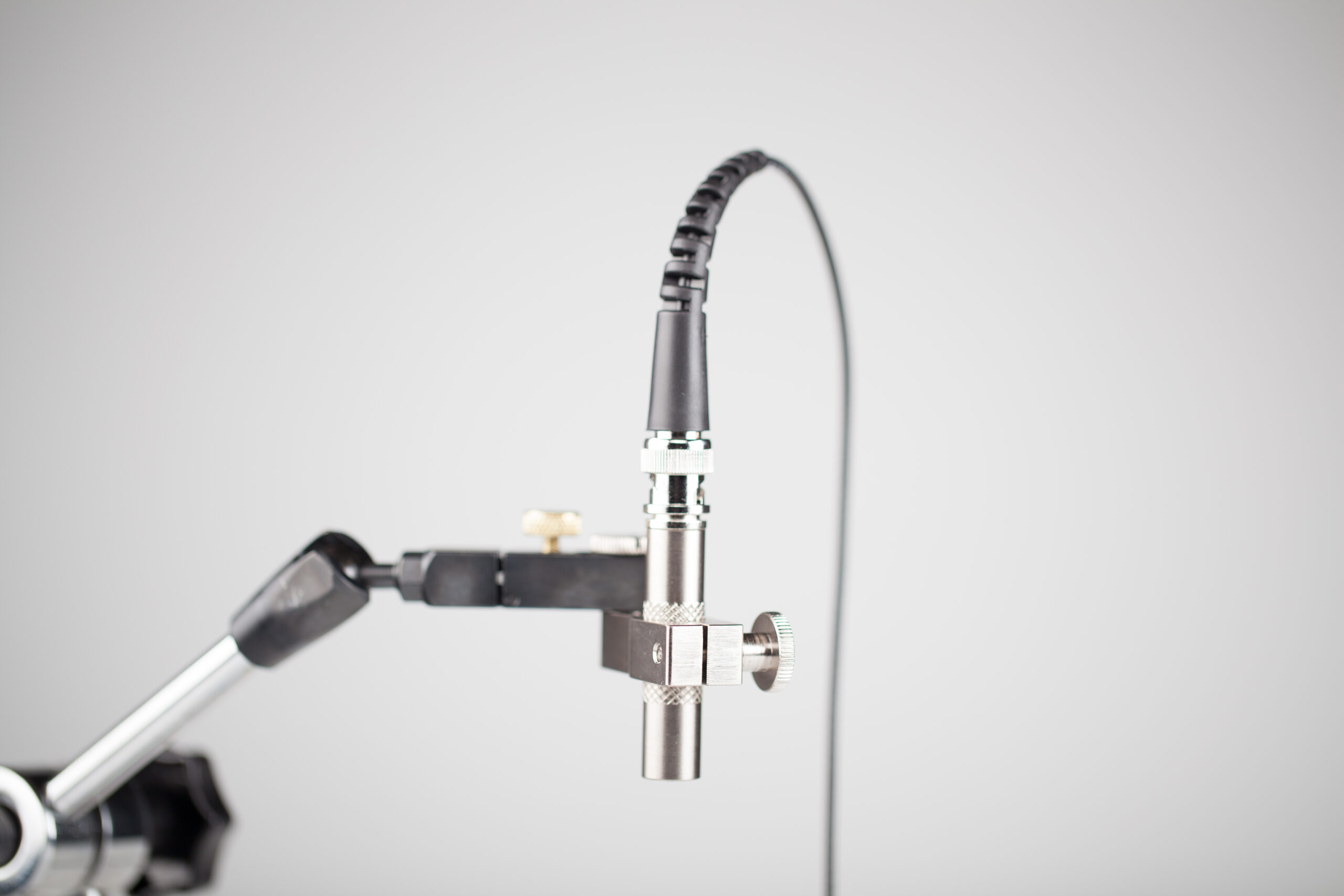
The semi-automated excitation device enables the operator to perform impulse excitation measurements at room temperature. A dedicated microphone with a large frequency range detects the induced vibration signal. The system amplifies these signals and sends them to a computer for analysis resulting in the identification of the resonant frequencies as well as the internal friction or damping (Q-1). The resonant frequencies are used to calculate the Young’s and shear moduli & Poisson’s ratio for pre-defined sample geometries in accordance with the relevant standards, such as ASTM E1876-22. The user-friendly interface in the RFDA Essential facilitates easy interpretation and logging of the results as well as full access to all measurement settings during the measurement.
| Temperature range | Ambient temperature (5°C to 40°C) |
| Atmosphere | Air |
| Humidity specification | Maximum relative humidity 80% for temperatures up to 31°C decreasing linearly to 50% relative humidity at 40°C. |
| Data aqcuisition | Integrated DAQ Board, Sampling rate: 100.000 S/s (Nyquist: 50 kHz) Frequency Range: 10 Hz to 33 kHz (1/3 of sampling rate) |
| Included hardware | RFDA system 20 Microphone (10 Hz – 33 kHz) with holder Manual excitation devices (2x) and Semi-automatic excitation unit (5 projectiles with different mass) Universal Wire Support (Bars, Rods, Discs, Tubes, …) Connection cables |
| PC included | Optional |
| Upgradable to HT systems | No |
| Software | RFDA Essential |
| Software Extensions (Optional) | Non-Linear Behavior Toolkit Product Inspection Toolkit |
Identify elastic properties with precision:
The RFDA Essential instrument allows advanced material testing by enabling to identify elastic properties at ambient temperature. The RFDA Essential allows you to effortlessly determine Young’s modulus (E), Shear modulus (G), and Poisson’s ratio (ν) in a single non-destructive measurement, saving you time and effort.
Non-Destructive:
Experience the advantages of non-destructive testing with the RFDA Essential. By measuring near the origin of the stress/strain curve, you can obtain dynamic material properties without compromising the integrity of your samples. Preserve your valuable materials while obtaining accurate results.
High accuracy:
The RFDA algorithm utilizes an iterative process that analyzes the sample’s natural frequencies with high accuracy. The resulting frequency data, combined with the damping value (Q-1), provides you with a comprehensive understanding of your material’s behavior.
Wide range of applications:
From material science to quality control and beyond, the RFDA Essential finds its place in diverse industries. Whether you’re conducting research, ensuring product quality, or optimizing manufacturing processes, the versatility of the RFDA Professional covers a wide range of applications.
Ease of use:
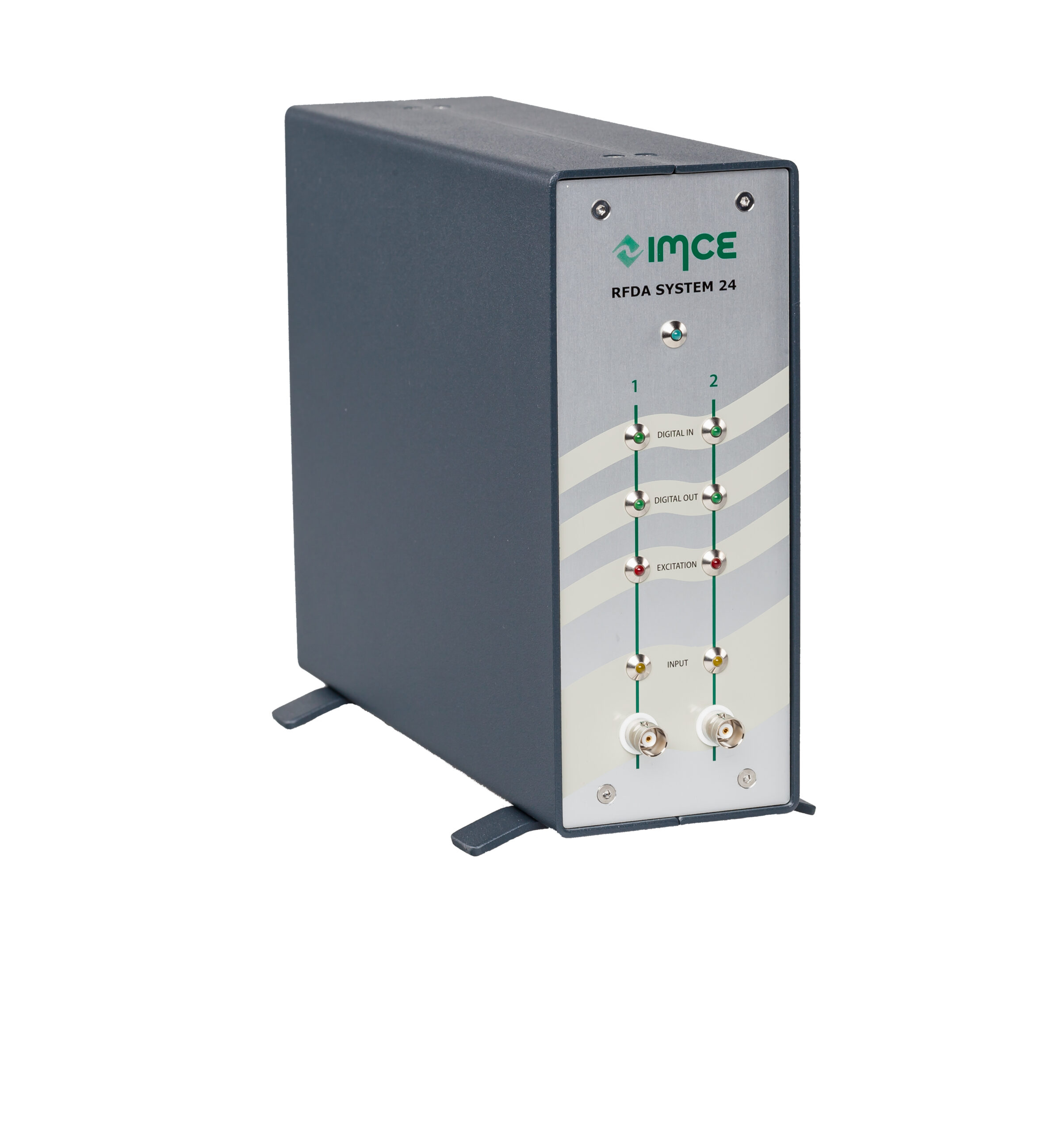
The RFDA Essential comes equipped with a universal sample support system, excitation device (manual and semi-automatic), microphone, and the innovative RFDA System 20. The user-friendly interface and intuitive controls make operation easy, allowing you to focus on your analysis.
Built on expertise:
IMCE measurement system are build on innovative technology developed by our in-house R&D. The RFDA Essential is designed with more than 30 years of experience, innovation, and commitment to excellence ensuring a measurement system of the highest standard.
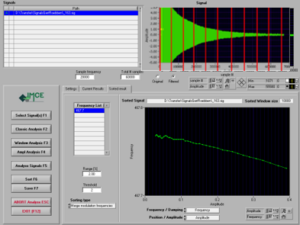
The Non-Linear behavior toolkit is an optional software toolkit designed to study the amplitude dependent behavior of materials.
This amplitude dependent behavior can be used to detect defects in materials at an early stage.
To perform a non-linear analysis, the measured signal is divided in different parts (time or amplitude window). In each window, the frequency and damping parameters are determined and plotted as function of the vibration amplitude. A shift of these parameters vs. the amplitude is characteristic for non-linear behavior and can give useful information regarding the formation of micro cracks. In general, a certain amplitude threshold is required to open/close the defects (for example: micro cracks, dislocations, …) which leads to non-linear behavior.
Included functions:
- Step analysis of the time signal.
The user can define the segments in a time or amplitude window.
This analysis can be performed during the measurement or on a batch of earlier saved signals. - When the amplitude of the vibration (for example: signals from laser-vibrometer) and the
dimensions and shape of the sample are known, it is possible to calculate the maximum
deformation amplitude in the signal. - Full integration in the RFDA Essential software
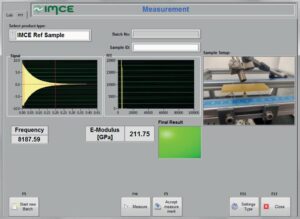
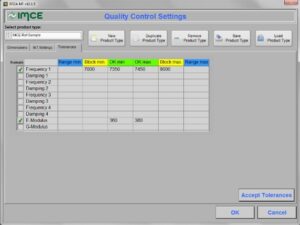
The optional Product Inspection toolkit offers a simplified user interface with go/no go Indication for use in production environments.
All measurement set-up and tolerances are product type configurable.
Within the software’s lab environment, a comprehensive analysis of a particular product can be conducted. This analysis results in a product type that includes the essential parameters for making a go/no-go decision. In production environments, these parameters ( available in read-only mode) can be loaded to inspect the relevant product type.
The user’s task is straightforward: position the sample on the support as indicated by the software, execute the measurement, and let the Product Inspection Toolkit compare the obtained values against the predetermined tolerances within the product type. Following the comparison, the software promptly signals a Go/No-Go/Suspect status.
Included functions:
- Managing of product types and setting of tolerances
- Password protection of user levels
- Save/Load of product types
- Visual representation of sample setup
- Go/No-Go/Suspect indication
- Batch measurements
This module is fully integrated in the RFDA Essential software.
Want to know more about the RFDA Essential instrument?
Whether you have questions or want a personalized product demo, our experts are ready to help you out!
Schedule a free, no-obligation online meeting with us by conveniently booking a slot in our agenda.
Let’s connect and discover how our advanced material testing instruments can maximize your testing capabilities!