
News
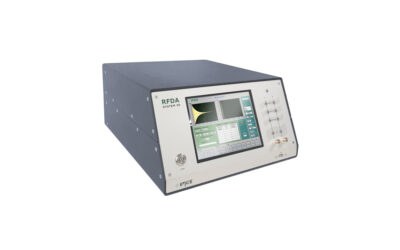
RFDA System 30 launch
One integrated RFDA system. Ready for the lab, production floor and future automation. As RFDA systems continue to move beyond the laboratory and closer to production, measurement systems need to be easier to deploy, operate and integrate. The new RFDA System 30...

The International Colloquium on Refractories ICR® 2026
Innovation requires extensive research, but traditional testing methods can drastically limit R&D speed. Traditional destructive testing methods, such as tensile tests, 3- or 4-point bending tests, or (nano-)indentation tests, struggle to meet the demands of...

Improving resonant frequency and damping analysis at high temperatures via laser Doppler vibrometer sensor
This paper on Laser Doppler Vibrometry investigates how to better measure the stiffness (elastic properties) and energy loss (damping) of refractory materials when they are heated to very high temperatures. Traditional acoustic sensors struggle at high temperatures...
Advanced Materials Show 2026
Faster Materials Innovation Starts With Better Data Discover how RFDA technology helps R&D and QC teams generate faster, richer material insights across ceramics, composites, metals, battery materials, polymers, and high-performance materials, without destructive...

Ceramitec 2026
Innovation requires extensive research, but traditional testing methods can drastically limit R&D speed. Traditional destructive testing methods, such as tensile tests, 3- or 4-point bending tests, or (nano-)indentation tests, struggle to meet the demands of...
The International Colloquium on Refractories ICR® 2025
Innovation requires extensive research, but traditional testing methods can drastically limit R&D speed. Traditional destructive testing methods, such as tensile tests, 3- or 4-point bending tests, or (nano-)indentation tests, struggle to meet the demands of...

ECerS 2025: In-Situ Material Characterization and Quality control
Innovation requires extensive research, but traditional testing methods can drastically limit the R&D speed. Traditional destructive testing methods such as Tensile tests, 3- or 4 point bending test or (nano-)indentation tests are not able to keep up with the...
The Advanced Materials Show UK 2025: In-Situ Material Characterization and Quality control
Innovation requires extensive research, but traditional testing methods can drastically limit the R&D speed. Traditional destructive testing methods such as Tensile tests, 3- or 4 point bending test or (nano-)indentation tests are not able to keep up with the...
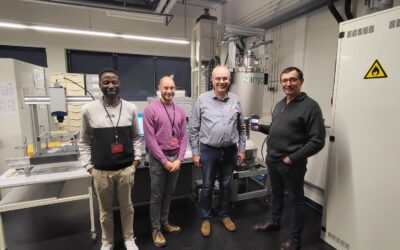
RFDA HTVP1600 @ University of Limoges
Throughout the years, Prof. Huger from the University of Limoges (France) showed interest in the impulse excitation technique for continuous material characterization during temperature cycles.After a successfull tendering procedure, IMCE was granted to deliver the...
The International Colloquium on Refractories ICR® 2024
Innovation requires extensive research, but traditional testing methods can drastically limit R&D speed. Traditional destructive testing methods, such as tensile tests, 3- or 4-point bending tests, or (nano-)indentation tests, struggle to meet the demands of...